Equine Assisted Learning (EAL) is a guided, mainly ground-based experience where participants build self-awareness, communication skills, and confidence through structured interactions with horses. While it’s not formal therapy, it can be a deeply therapeutic experience.
EAL is an educational and experiential model. Sessions are goal-focused, led by trained facilitators, and entirely participant-led in a non-judgemental, safe, and responsive environment. Rather than analysing or diagnosing, we support participants to reflect, explore, and develop life skills in the presence of horses, who act as honest, non-verbal mirrors.
It’s relational, experiential learning—calm, embodied, and often quietly profound.
What Happens in a Session?
Every Equine Assisted Learning session at Two Seasons is shaped by the participant. While there’s a gentle structure to ensure safety, the experience is responsive, relational, and deeply personal.
Sessions begin with a calm welcome from Sharon, who introduces each horse by name and temperament. She’ll explain how to interact safely and respectfully, giving insight into the horse’s body language and emotional cues. This early connection lays the foundation for the rest of the session.
From there, the session can unfold in many ways, depending on your needs, comfort level, and interest. You might:
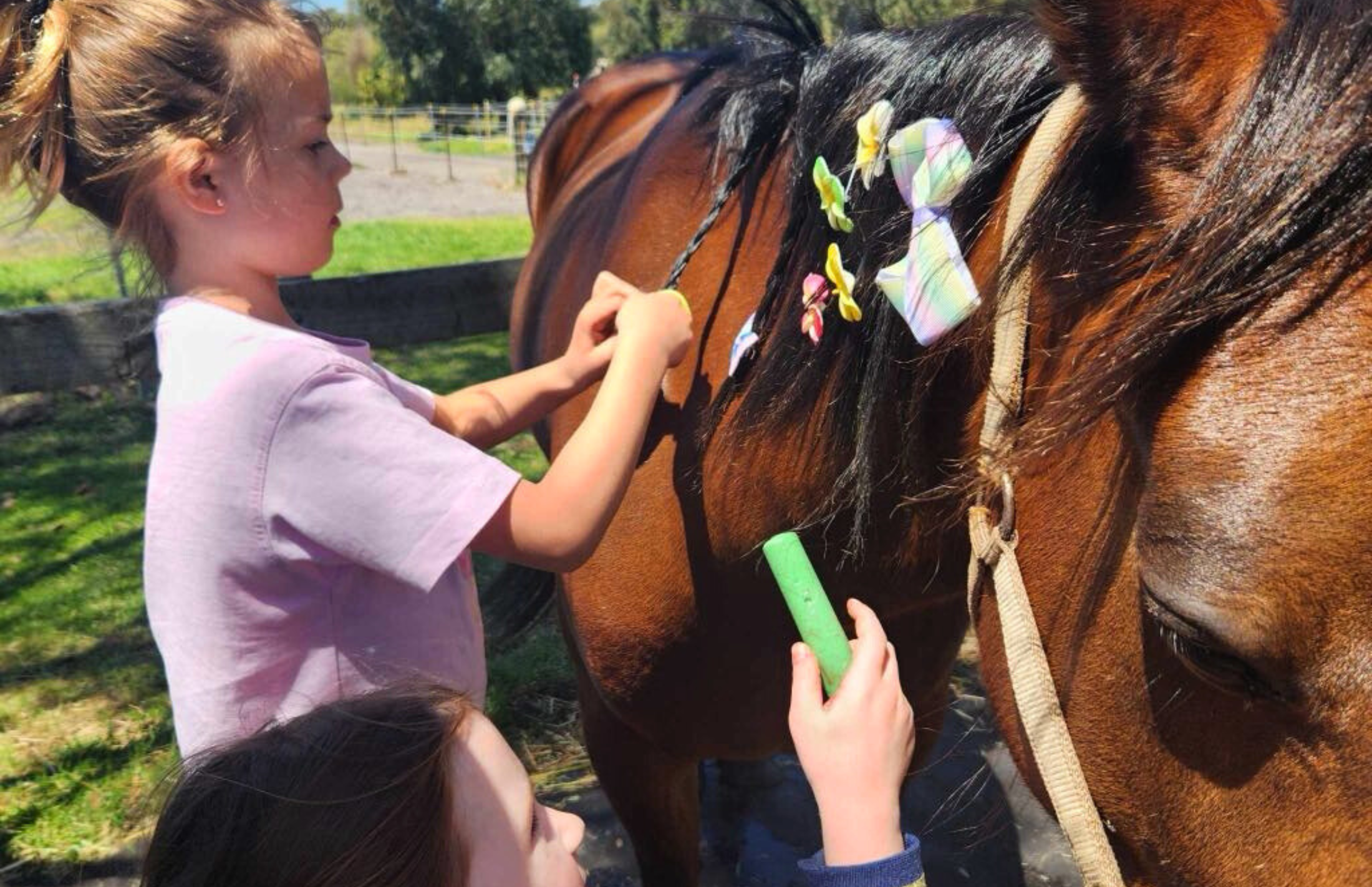
Braid a horse’s mane or tail
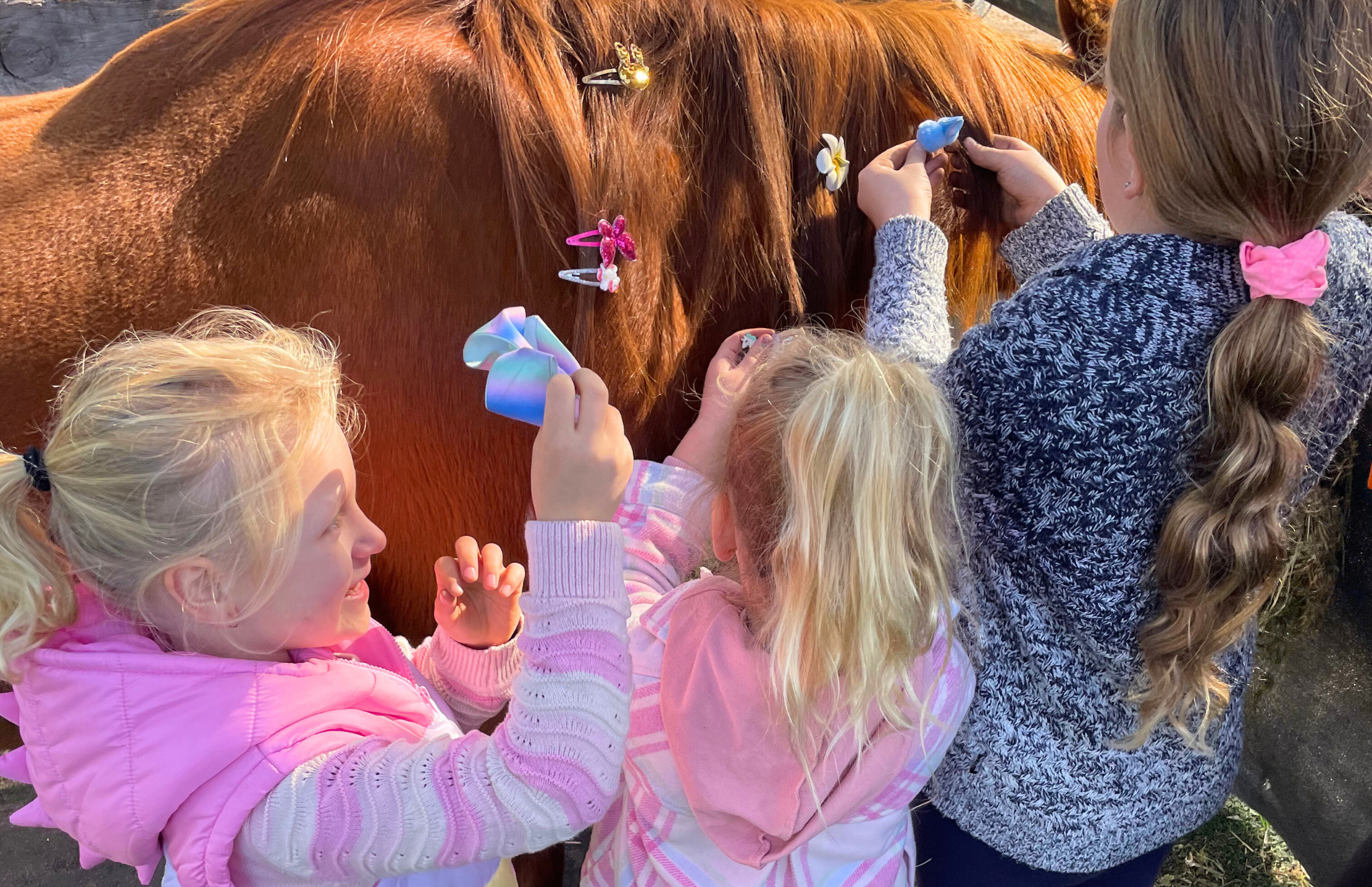
Decorate their coat with safe paints, ribbons, or natural materials
Gently bathe or brush them, focusing on sensory connection and mutual regulation
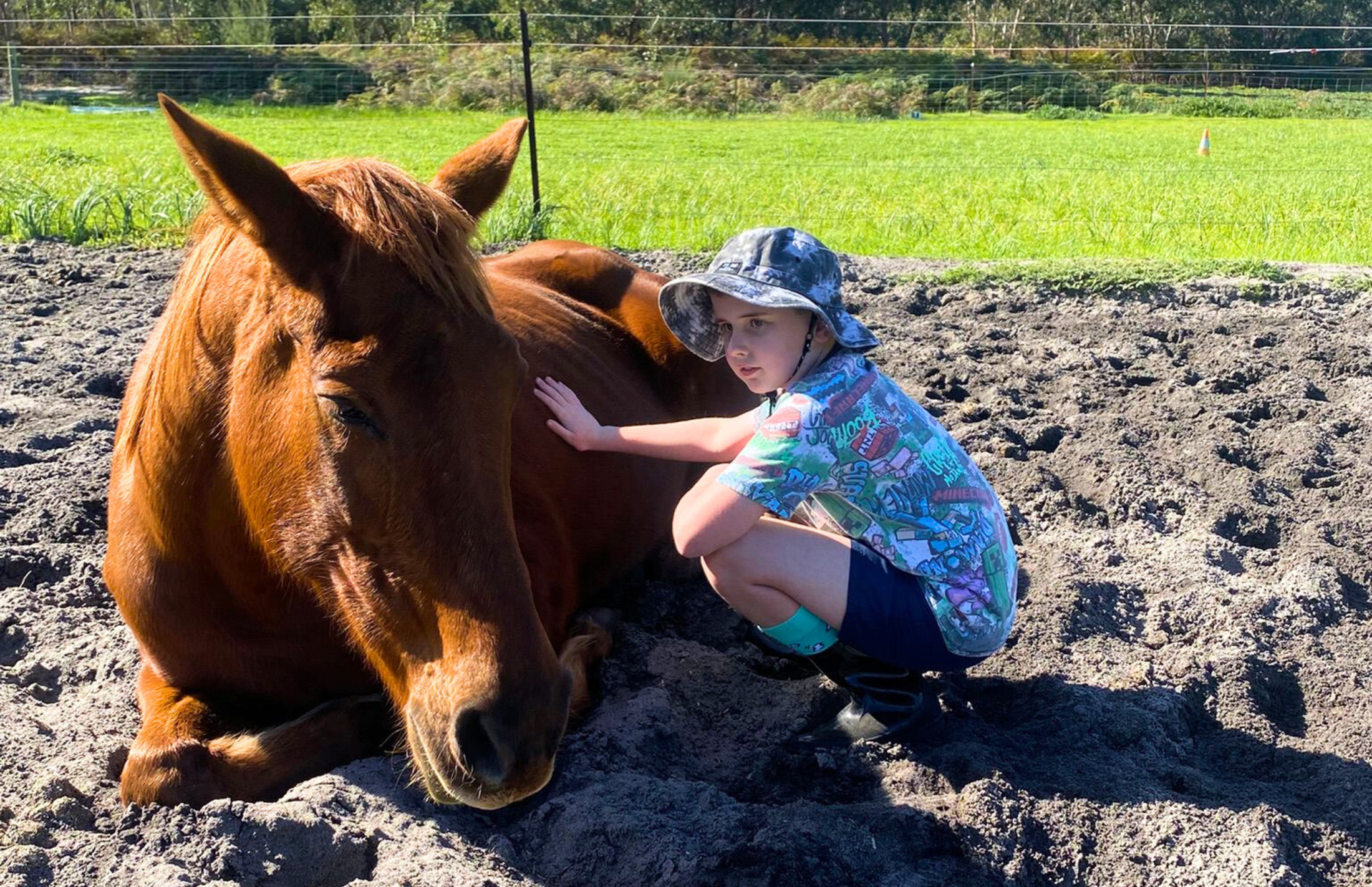
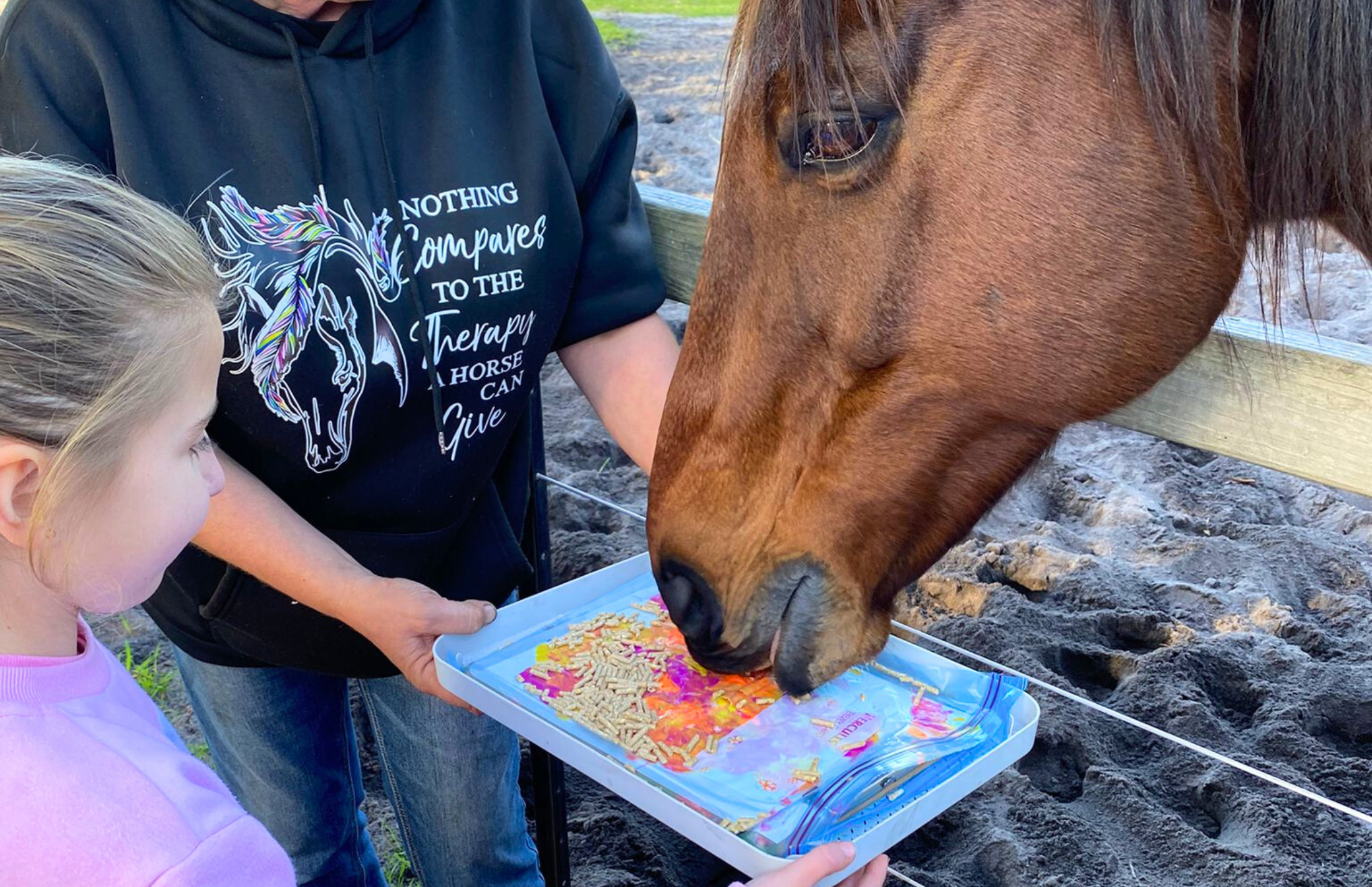
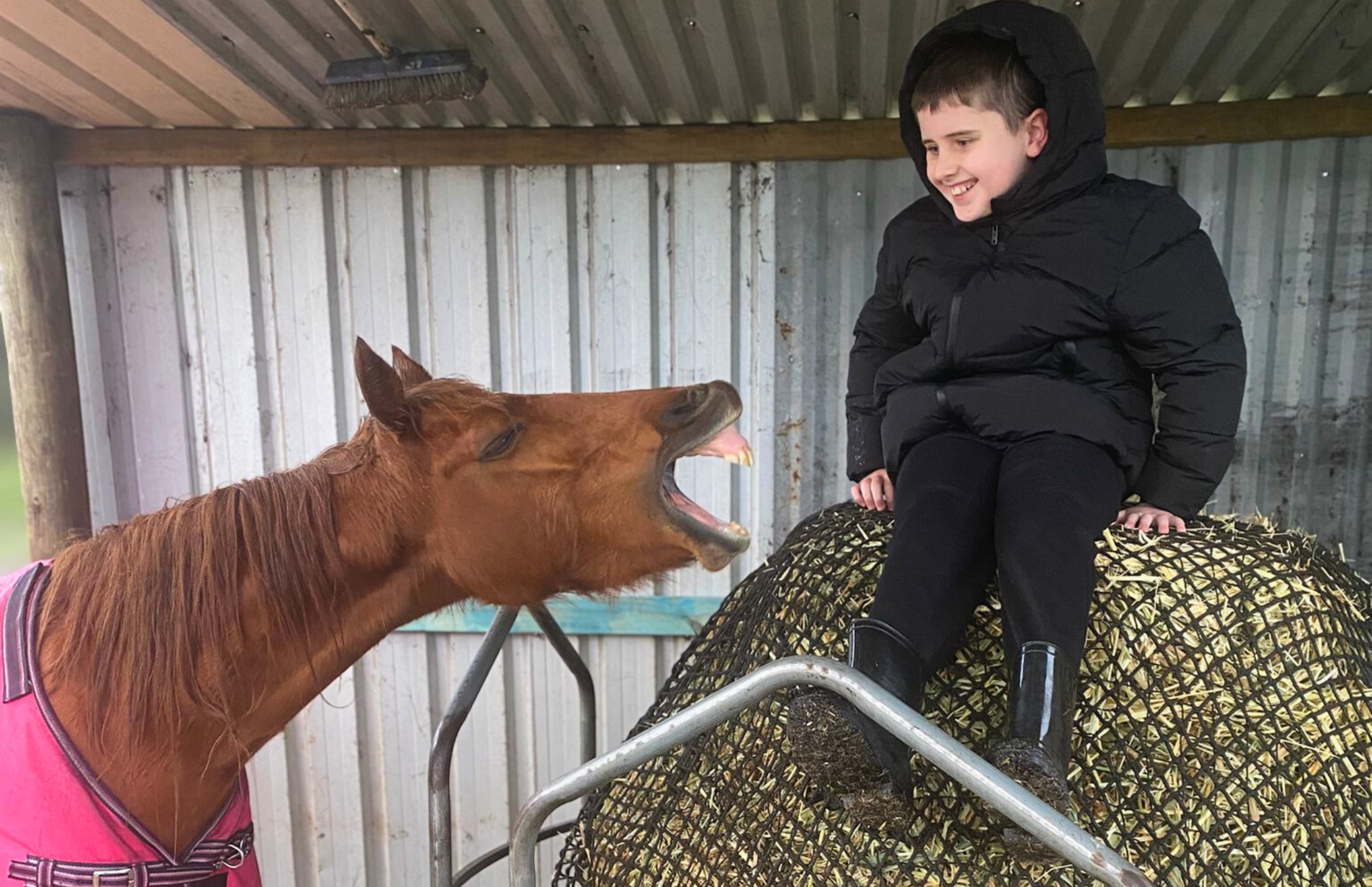
Offer feed, prepare their space, or just sit nearby and observe
Do creative, horse-inspired arts and crafts if you prefer space and stillness
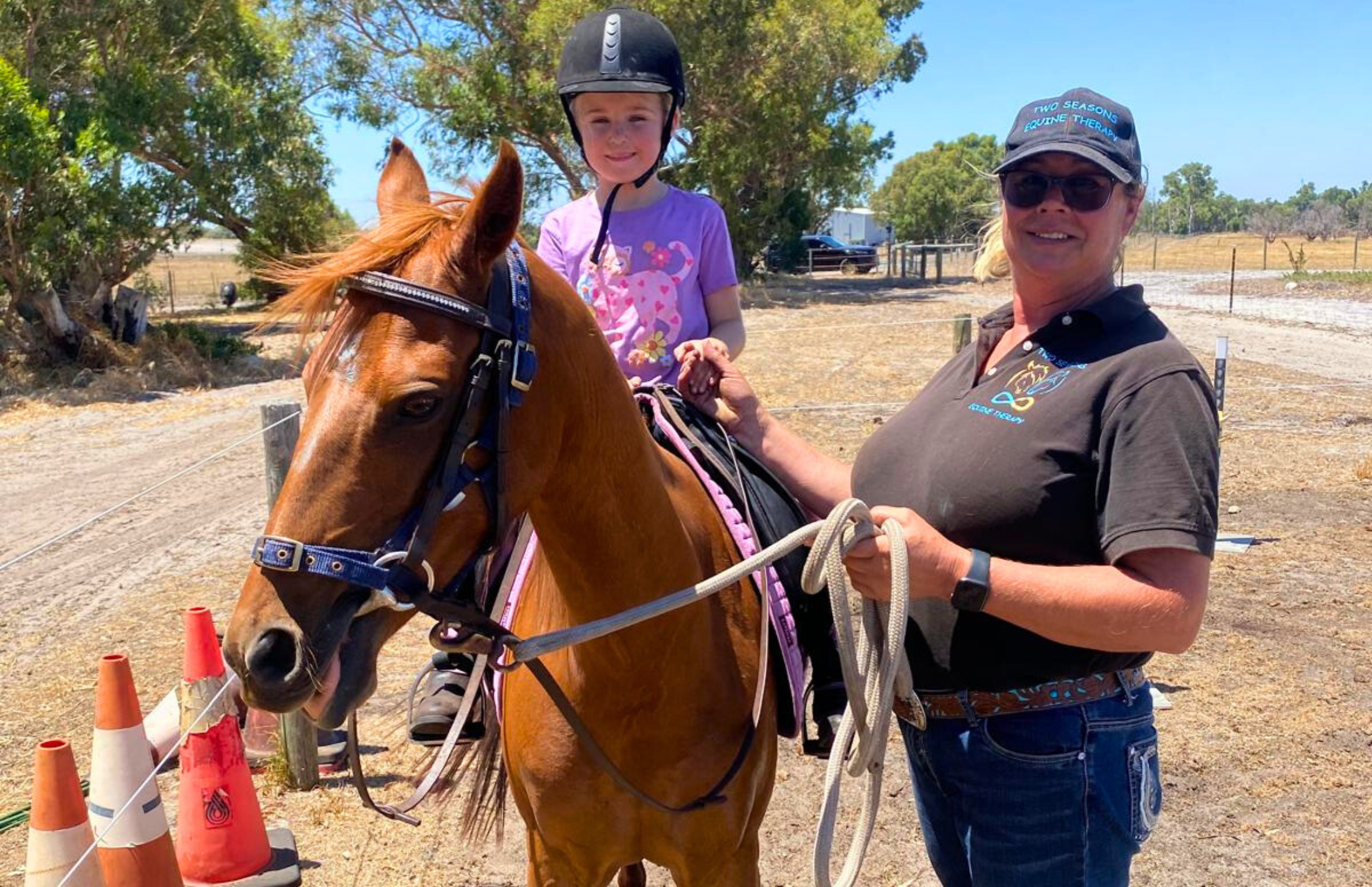
Take a supported pony ride through a small obstacle course
Throughout the session, Sharon gently narrates and reflects on what’s happening. She might draw your attention to a horse’s subtle response; a shift of weight, a flick of the ears, a softening eye, a mirrored movement, and explore what it might be telling you. These moments often become powerful metaphors for real-life relationships, boundaries, and emotions.
Each session ends quietly, giving space to debrief and integrate the experience, often with a final thank you to the horses and a soft reflection on what you’re taking away. If you created artwork during the session, you’re welcome to take it home.
Who is it for?
Equine Assisted Learning is open to anyone seeking a calm, respectful space for emotional or personal growth. No diagnosis or referral needed.
Sessions are tailored for people of all ages and backgrounds, including those living with:
ADHD or Autism Spectrum Disorder (ASD)
Pathological Demand Avoidance (PDA) or Oppositional Defiant Disorder (ODD)
Sensory Processing Disorder (SPD), Global Developmental Delay (GDD), or Intellectual Disability (ID)
Developmental Coordination Disorder (DCD)
PTSD, anxiety, depression, or other mental health challenges
Trauma recovery, substance use recovery, or disordered eating
Dementia or age-related cognitive changes
A diagnosis is not required to attend EAL sessions. Many participants come simply seeking:
Emotional regulation
A break from overwhelm
More confidence in themselves
A safe space to connect with others, or just with a calm, non-verbal presence
Whether you’re a young person struggling in school, a parent navigating a child’s unique needs, or an adult craving peace and reconnection, you’re welcome here.
Why horses?
At the heart of Equine Assisted Learning are the horses themselves, intuitive, responsive animals who live fully in the moment. Horses are prey animals, which means they’re finely attuned to the emotional states of those around them. They don’t speak, but they notice everything: your breathing, your posture, your energy, your presence.
This makes them fantastic mirrors for how we show up and they reflect back patterns we may not see in ourselves.
A child who struggles with boundaries may find that a horse gently walks away when approached too quickly.
A teen who feels disconnected might notice a horse quietly stepping closer once they settle into their body.
An adult carrying stress may learn to regulate their breathing so a horse feels safe enough to stay nearby.
At Two Seasons Equine Assisted Learning, we honour the horse as a partner in learning, never a tool or a prop. Their wellbeing is central to everything we do, and the relationships they form with participants are real, mutual, and often deeply moving.
Curious to experience it for yourself?
Book your first session or get in touch! We’re happy to answer your questions.
Websites store cookies to enhance functionality and personalise your experience. You can manage your preferences, but blocking some cookies may impact site performance and services.
Essential cookies enable basic functions and are necessary for the proper function of the website.
Name
Description
Duration
Cookie Preferences
This cookie is used to store the user's cookie consent preferences.
30 days
Statistics cookies collect information anonymously. This information helps us understand how visitors use our website.
Name
Description
Duration
Cookie Statistics
This cookie is used to store statistics information.
30 days
Marketing cookies are used to follow visitors to websites. The intention is to show ads that are relevant and engaging to the individual user.
Name
Description
Duration
Cookie Marketing
This cookie is used to follow visitor to websites.